top of page
Mt. Kitanglad
Mindanao
When we received a call to join a birding trip to the large southern island of Mindanao in April 2026 we did not hesitate. Taking the car ferry to Dapitan port a 10h drive with multiple mountain passes lead us to Mt. Kitanglad, where we spent the next four days. Main target was the philippine eagle at Cinchona, but a number of other places including hides and higher altitude locations were also visited.

short-billed brown doves are common endemics to mindanao and eastern visayas, this individual perched nicely at cinchona

a philippine pygmy woodpecker, another philippine endemic at cinchona

turquoise flycatcher, a fairly common bird of mountaneous areas all over the philippines

bundok flycatchers, here a female, are another philippine endemic, easily seen at Maputi hide

blue-capped kingfishers are uncommon endemics of mountain forests in mindanao

striated wren-babbler, another uncommon endemic of mindanao and eastern visayas at the hide

apo mynahs are local mindanao endemics restricted to higher altitudes

philippine hanging-parrots, here the mindanao subspecies, are common endemics found from forests to gardens all over the philippines

mindanao hornbills, here a male, are uncommon endemics, restricted to forests on mindanao island

bagobo babblers are shy endemic and local inhabitants of forested mountains in mindanao. Maputi hide is probably the best place for observations.

the more colourful male

just seconds after distributing some worms at Maputi hide this beautiful male showed up

distant view of an endemic philippine falconet, a tiny, but feisty bird of prey hunting large insects in the air

their calls are strangely metallic and not at all musical
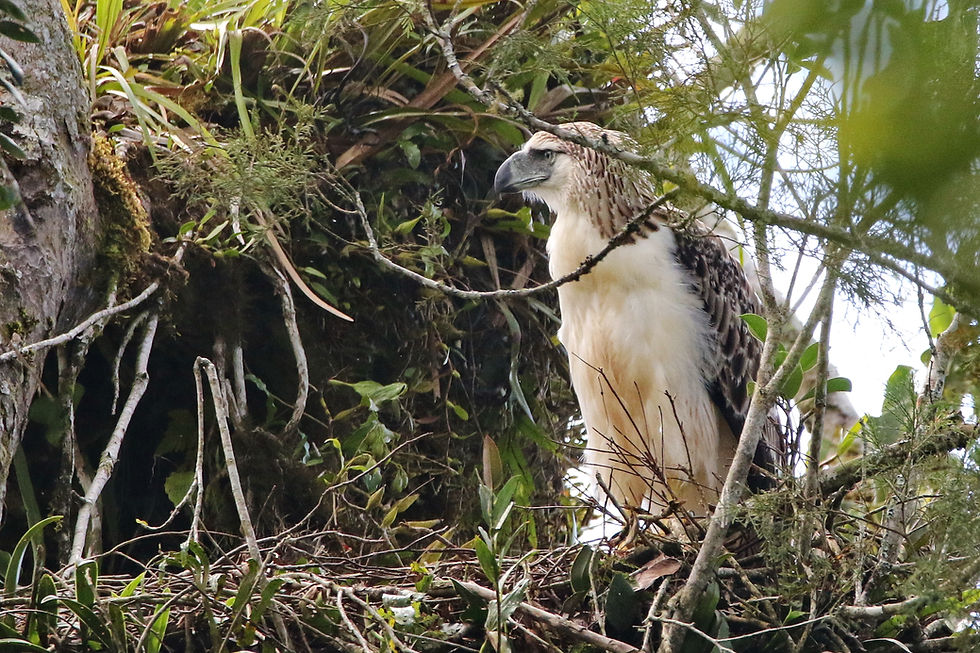
Cinchona forest reserve is a large 30000 ha forested mountain area and home to four pairs of critically endangered philippine eagles, the philippine national bird. These endemics are restricted to extensive tracts of undisturbed forest in Luzon, Samar and Mindanao. Deforestation and hunting have braught the species to the brink of extinction. Kitanglad is one of few remaining strongholds and a number of dedicated guardians do their upmost to protect these magnificent raptors. Every three or four years a philippine eagle pair raises one chick and it takes that long for the chick to grow, learn to fly and - most time consuming - to hunt.
Philippine eagles are next to south american harpyes the largest eagles in the world, they are rarely preying on monkeys , so their common name, monkey eating eagle, is somewhat misleading. Main prey are flying lemurs and each eagle pair needs approximately 7000 ha of undisturbed territory, thus making these birds incredibly rare. During our visit we were very fortunate to encounter an almost grown up female eagle, which was about to learn how to fly. At that age the parents no longer bring food every day and we have seen an adult only from very far distance. The chick was calling several times seemingly for the parents and begging for food, however some food restes were still present.

the chick was almost fully grown and able to display its iconic crest


glimpse of one of the huge bear sized talons

bottom of page